
Fortunately, there’s a metric that reveals the connection between asset investment and the revenue it generates. The investments and services offered by us may not be suitable for all investors. FinanceWorld Inc. provides only financial management and provides remote management of orders on clients’ accounts. All trading or investment decisions are fully on responsibility of the account owner and include but are not limited to any kind of loss of capital. Selecting an IT supplier goes beyond technical fit and price; it requires a deep understanding of the supplier’s financial health and stability.

Why is ROE Important?
Companies should strive to maximize the benefits received from their assets on hand, which tends to coincide with the objective of minimizing any operating waste. Several factors can influence the Asset Turnover Ratio, making it important to look at this metric in conjunction with other financial indicators. Calculating the Asset Turnover Ratio is relatively simple, but the accuracy of the result depends on the quality of the data.
Asset Turnover Ratio
Efficiency ratios indicate whether assets and liabilities are being managed productively or contributing to unnecessary expenses and financial strain. Financial ratio analysis is the process of evaluating a company’s performance by examining key ratios across liquidity, profitability, leverage, and efficiency. Ratio analysis helps financial analysts identify a company’s strengths and weaknesses, track performance trends, and make comparisons with competitors or industry benchmarks. Financial ratios are calculations that compare two or more figures from a company’s financial statements to measure performance and financial health.
- If depreciation or disposals were involved, the simple average could diverge more significantly from the true operational asset base.
- Asset turnover, also known as the asset turnover ratio, measures how efficiently a business uses its assets to generate sales.
- Conversely, they could also be presented as the gross value of total fixed assets along with the accumulated depreciation recognized to date, aggregated to their net value.
- In simple terms, the company is creating more sales per dollar of assets, indicating efficient asset management.
- Asset turnover measures how efficiently a company uses its assets to generate revenue.
- The ‘net book value’ is important here – it means the original cost of the asset minus its accumulated depreciation.
Interpreting the Asset Turnover Ratio

Return on Equity is a two-part ratio in its derivation because it brings together the income statement and the balance sheet, where net income or profit is compared to the shareholders’ equity. The number represents the total return on equity capital and shows the firm’s ability to turn equity investments into profits. To put it another way, it measures the profits made for each dollar from shareholders’ equity. Understanding these variations helps you drill down into specific areas of asset management. Fixed asset turnover measures how effectively a company utilizes its long-term investments, such as machinery and buildings.
In the example, the business is generating $4 of sales for every $1 of assets. Asset turnover may be less useful for companies with minimal physical assets, such as service or software-based businesses, where intangible assets are more significant. In general, this ratio is best used to assess and compare asset-heavy businesses, such as car manufacturers or asset turnover formula airlines. Despite lower ratios, which are common in asset-intensive industries, Verizon’s higher figure suggests more effective asset use compared to AT&T.

FAQs about KPI Depot

Plus, leaning heavily on this single metric without considering profit margins or return on assets can skew one’s financial perception. A good asset turnover ratio varies by industry, but a higher ratio is generally better. However, another factor for companies operating in the same industry is that sometimes a company with older assets will have higher asset turnover ratios since the accumulated depreciation would be more.
Just-in-time inventory systems, http://simoiben.com/2023/01/20/cost-control-vs-cost-reduction-whats-the/ demand forecasting improvements, and supplier relationship optimization can reduce inventory levels while maintaining service levels. Understanding what the asset turnover ratio means requires looking beyond the numbers to industry context and business model characteristics. A ratio of 2.0 might signal excellent efficiency in one sector while indicating potential problems in another. This shows they were able to generate revenue efficiently relative to the assets they owned during the period. The higher this number, the more efficiently they’re using their asset base to drive sales. For example, to calculate average total assets, you add the amount of assets at the beginning and end of the year, then divide by two.
- Some industries tend to achieve higher ROEs than others, and therefore, ROE is most useful when comparing companies within the same industry.
- Excess inventory ties up capital without generating additional revenue, directly hurting asset turnover.
- Businesses can harness the power of Asset Turnover in strategic planning by using it as a compass for operations.
- For example, a company that experiences higher sales during the holiday season may have a higher asset turnover ratio during that period compared to other times of the year.
- The asset turnover ratio measures the efficiency of how well a company uses assets to produce sales.
Actionable Strategies to Win with Asset Turnover Formula
A higher ratio indicates better efficiency, while a lower ratio suggests poor use of assets, possibly due to underutilized fixed assets, weak collections, or poor inventory management. Comparisons should only Purchases Journal be made within the same industry, as capital intensity varies widely. Thus, while the Asset Turnover Ratio measures operational efficiency, the Debt-to-Equity Ratio evaluates financial risk. Investors often look at both to assess a company’s ability to manage its operations and its finances. With an asset turnover ratio of 0.30, AT&T generates only $0.30 in sales for every dollar of assets. This low ratio is typical for capital-intensive industries like telecommunications, where substantial investments in infrastructure are necessary.
This can signal inefficiency and may require management attention to improve operational performance. Investors use asset turnover to assess how efficiently a company uses its resources. A higher turnover suggests that the company is managing its assets effectively to drive revenue, which can be a positive indicator of operational efficiency and profitability. Understanding OSCTOTAL/S isn’t just about calculating a ratio; it’s about gaining insights into a company’s financial health and operational efficiency. A high OSCTOTAL/S can be a red flag, signaling potential problems with cash flow management and credit policies. It might indicate that a company is having difficulty collecting payments from customers, which can lead to liquidity issues and hinder its ability to meet its financial obligations.
Key Takeaways for Driving Operational Efficiency
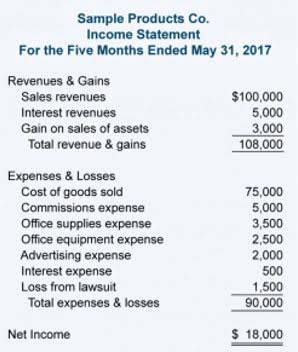
The total asset turnover ratio is a general efficiency ratio that measures how efficiently a company uses all of its assets. This gives investors and creditors an idea of how a company is managed and uses its assets to produce products and sales. While a ratio greater than 1 is generally favorable, indicating effective use of assets, interpretation should always be made in the context of the industry, the company’s profit margin, and its business model. The total asset turnover ratio should be used in combination with other financial ratios for a comprehensive analysis. The fixed asset turnover ratio formula divides a company’s net sales by the value of its average fixed assets.